The Japanese Art of Wardrobe Rotation
Koromo-gae (衣替え, literally "changing clothes") is a centuries-old Japanese practice of rotating seasonal wardrobes — storing winter clothes in summer and vice versa. Historically practiced on fixed dates (June 1st for summer rotation, October 1st for winter), it has evolved in modern life into a practical seasonal habit.
For Danshari practitioners, the seasonal rotation is not merely a logistical exercise — it is a built-in opportunity to review and release. Every time you pack away a season's wardrobe, you ask the Danshari question: "Did I actually wear this? Does it still belong in my life?" The natural answer from items left at the bottom of the storage box for an entire season is often: no.
This rhythm of seasonal release and renewal is one of the most sustainable ways to practice Danshari continuously, without needing major periodic overhauls.
March — May
Spring Rotation
Pack heavy winter items. Review each piece — did it earn its keep this winter? Light layers come forward. Transition knitwear to mid-shelf storage.
June — August
Summer Wardrobe
Full summer wardrobe active. Light linen, cotton, yukata. Store remaining spring layers. Review swimwear and summer accessories for freshness.
September — November
Autumn Rotation
Summer items stored. Knitwear, light jackets, and autumn tones emerge. Review each summer item as you pack: Did I wear it? Does it still fit?
December — February
Winter Wardrobe
Heavy coats, wool layers, warm accessories active. Summer clothing in full storage. Ideal time to review autumn-season wear for release.

Seasonal clothes stored in Seria flat-pack storage bags and labeled boxes — clean, protected, and ready for the next rotation.
Choosing the Right Seasonal Storage
How you store off-season clothing matters for garment longevity. The wrong container can cause mold, moth damage, fabric compression, and color fading. Here is a guide to choosing the right storage method for each clothing type.
Heavy Knitwear & Wool
Use breathable fabric storage bags (Seria's flat-pack bags are ideal) or acid-free storage boxes. Never use sealed plastic bags — wool needs air circulation. Add cedar blocks or lavender sachets to deter moths. Store flat, never hung.
Down & Padded Coats
Store in large breathable garment bags hung vertically, or in oversized flat boxes. Compression damages down's insulating properties — do not vacuum-compress down items. Clean thoroughly before storing to prevent oil-based stains from setting.
Cotton & Linen Summer
Foldable cotton and linen items store well in Daiso or Seria stackable boxes. Ensure all items are clean and completely dry — any residual moisture will cause yellowing and mildew. Fold using the vertical filing method for easy identification.
Delicate Fabrics
Silk, chiffon, and other delicate fabrics should be stored in cloth garment bags away from light. Fold loosely to prevent crease damage. Tissue paper between folds prevents color transfer and maintains fabric structure during long storage periods.
Shoes
Clean and dry thoroughly before storage. Stuff with tissue or shoe trees to maintain shape. Store in original boxes (labeled on the outside) or transparent Daiso shoe boxes — the visibility prevents "out of sight, out of mind" syndrome.
Accessories & Small Items
Scarves, gloves, hats, and belts store well in Daiso's small grid baskets or shallow Seria boxes. Group by season. Label clearly. A single well-organized accessories box per season prevents the scattered-drawer problem entirely.
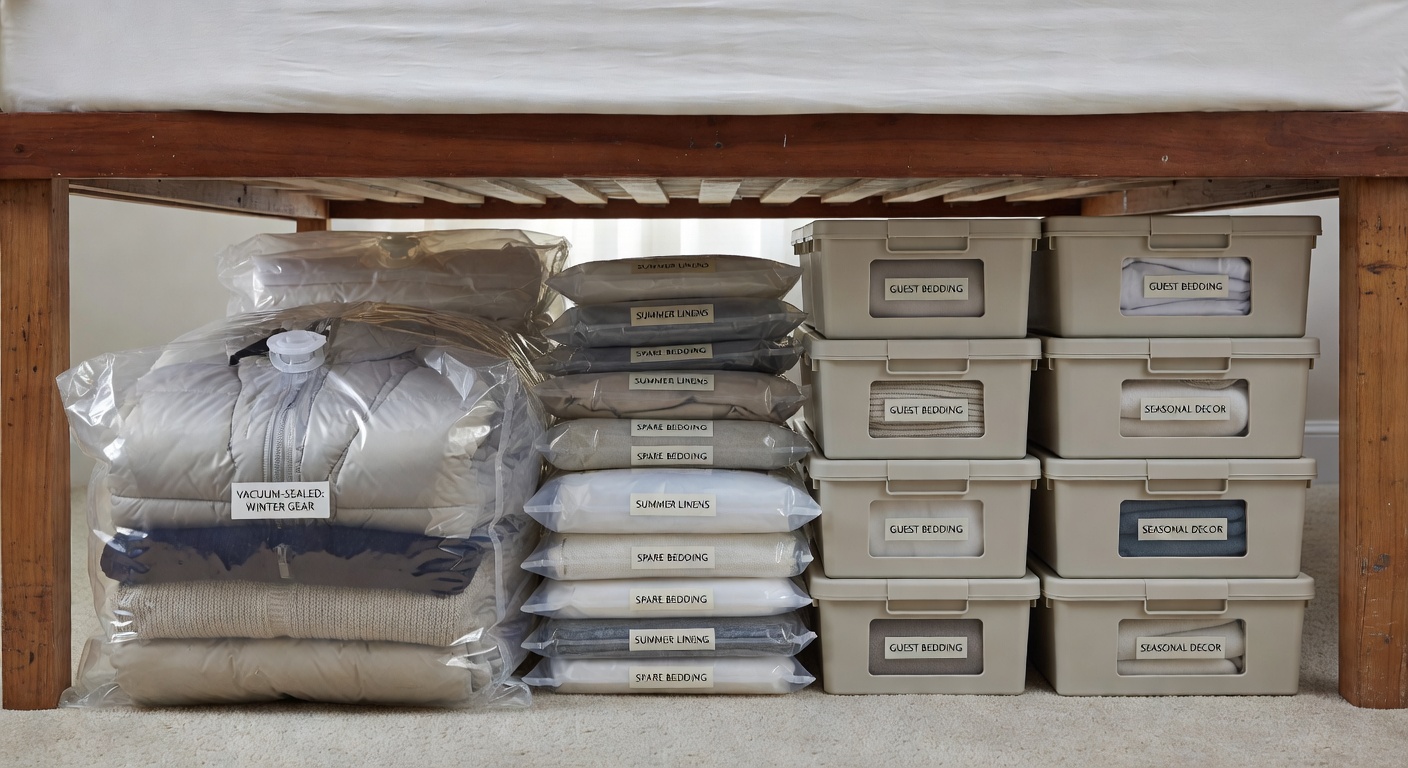
Under-bed flat storage containers — one of the most underutilized spaces in Japanese apartments, ideal for seasonal clothing rotation.
Under-Bed Storage: Japan's Hidden Space
In a typical Tokyo apartment, the space under the bed represents 1–2 square meters of storage area that most people either ignore or fill with random, disorganized items. Properly utilized, under-bed storage can hold an entire season's wardrobe — freeing your closet for daily-use items only.
What Goes Under the Bed?
- Off-season clothing in flat, low-profile storage containers (Daiso makes several specifically sized for under-bed use)
- Extra bedding — spare duvet sets, summer thin blankets, decorative cushions not in current use
- Rarely used items: luggage when not traveling, gift wrapping supplies, seasonal decorations
- Large flat items: extra futon mats (shikibuton), yoga mats, exercise equipment
Under-Bed Organization Tips
Use containers with wheels or handles for easy access — you shouldn't need to kneel and reach. Label the front face of every container clearly. Organize by season: Spring/Summer on one side, Autumn/Winter on the other, so rotation simply means switching sides.
Use a consistent container system — Daiso's under-bed flat boxes come in two standard heights (low profile for futon beds, medium for Western-style bed frames). Stick with one height to allow efficient packing beneath the entire bed frame.
Seasonal Rotation Checklist
The Rotation as Danshari Practice
The most powerful aspect of regular seasonal rotation is that it prevents the accumulation of clothes you never wear. Each rotation forces a review — and reviews lead to releases.
People who rotate seasonally consistently own fewer clothes than those who leave everything accessible year-round. When you have to physically handle every item twice a year, keeping things "just in case" becomes a conscious, deliberate choice — not an unconscious default.
Setting Up Your Rotation System
- Buy matching storage containers for all seasons upfront — uniform containers stack and store better
- Label containers with season + category (e.g., "Winter — Knitwear", "Summer — Linen Tops")
- Schedule rotation days in your calendar — a specific weekend in late May and late October
- Donate bag ready: always have a bag for release items during each rotation
- Photograph your stored wardrobe — useful if you forget what's in storage mid-season